Book Review: Shahid Hussain
This is the first time I have written a book review. Nearly two years ago, a colleague gifted me a copy of The Leader Who Had No Title by Robin Sharma. Although the book remained untouched in my suitcase for a long time, I finally decided to read it and completed it within three weeks. Despite my repeated delays and lack of consistency, I eventually gathered enough determination to finish it. Looking back, I am glad that I did, as the book proved to be both inspiring and thought-provoking.
The Leader Who Had No Title is a motivational book that challenges the traditional concept of leadership. Robin Sharma, a renowned author and leadership expert, presents his philosophy through an engaging story. The main character, Blake Davis, is an American war veteran who struggles to find purpose and direction in life after the death of his parents. After leaving military service, he works in a bookstore but remains dissatisfied and emotionally unsettled.
Blake’s life begins to change when he meets Tommy Flinn, an elderly employee at the bookstore and a close friend of Blake’s late father. Tommy introduces Blake to the idea that leadership is not determined by a person’s title, position, or authority. Through a series of encounters with four extraordinary mentors, Blake learns valuable lessons about personal growth, excellence, and leadership.
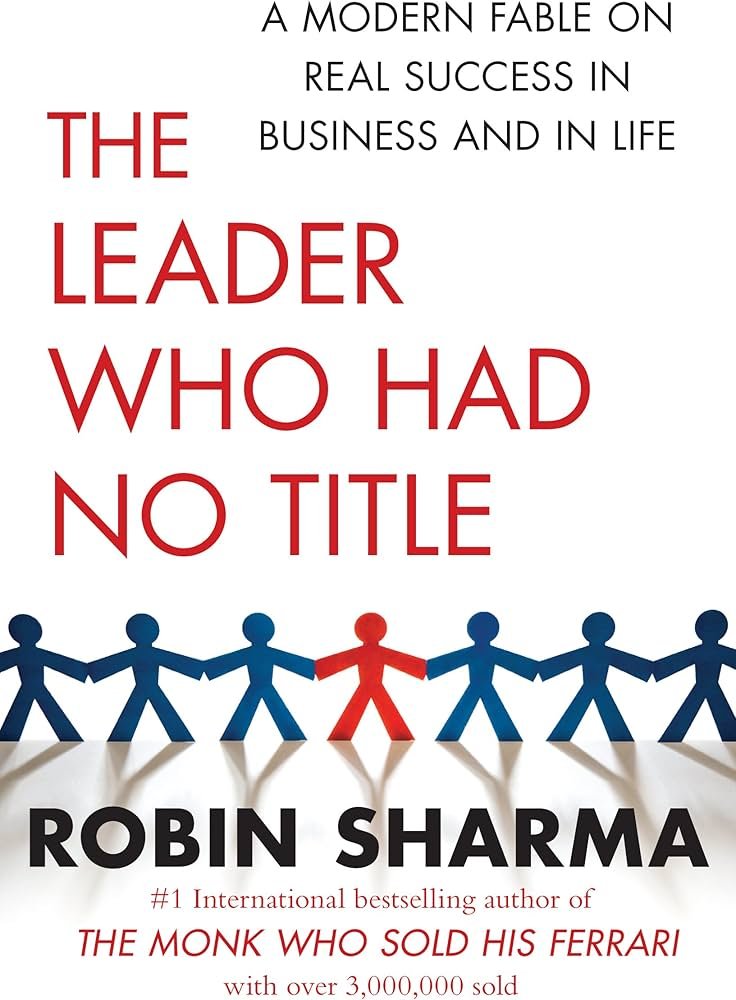
The central message of the book is reflected in its title: leadership does not require a title. Sharma argues that many people underestimate themselves because they believe leadership belongs only to those in powerful positions. According to the author’s “Leader Without a Title” philosophy, every individual has the ability to lead through their actions, attitude, and commitment to excellence. True leadership begins when people take responsibility for their work and strive to become the best version of themselves.
One of the book’s strongest ideas is the concept of self-leadership. Sharma emphasizes that a person cannot effectively lead others without first learning to lead himself or herself. Personal discipline, continuous improvement, and emotional resilience are presented as essential qualities of a leader. The author encourages readers to avoid mediocrity and embrace lifelong growth. He also offers practical advice, such as exercising regularly, reading consistently, building meaningful relationships, and respecting differences among people.
Another important lesson in the book is that difficult times help develop strong leaders. Sharma suggests that challenges, failures, and setbacks provide valuable opportunities for learning and growth. Rather than giving up when circumstances become difficult, successful people learn from their mistakes and continue moving forward. The book repeatedly emphasizes perseverance, adaptability, and the courage to act beyond what is merely expected.
What I appreciated most about this book is its ability to present powerful ideas in a simple and accessible manner. The story format makes the lessons easier to understand and remember. Although some readers may find certain ideas repetitive, the overall message remains inspiring and practical. The book encourages readers to take ownership of their lives and recognize their potential to create positive change regardless of their position or status.
Overall, The Leader Who Had No Title is an uplifting and motivating book that challenges conventional views of leadership. It teaches that leadership is not a privilege reserved for a few but a responsibility that everyone can embrace. I would recommend this book to students, teachers, professionals, and anyone seeking personal and professional growth.